
Your knees hurt when you climb stairs. Your shoulder aches after playing with your children. A doctor mentions joint replacement, and suddenly you’re wondering if there’s another way.
There often is.
Joint preservation surgery focuses on preserving your natural joint rather than replacing it. For many people, especially younger or active individuals, this approach offers a better long-term solution.
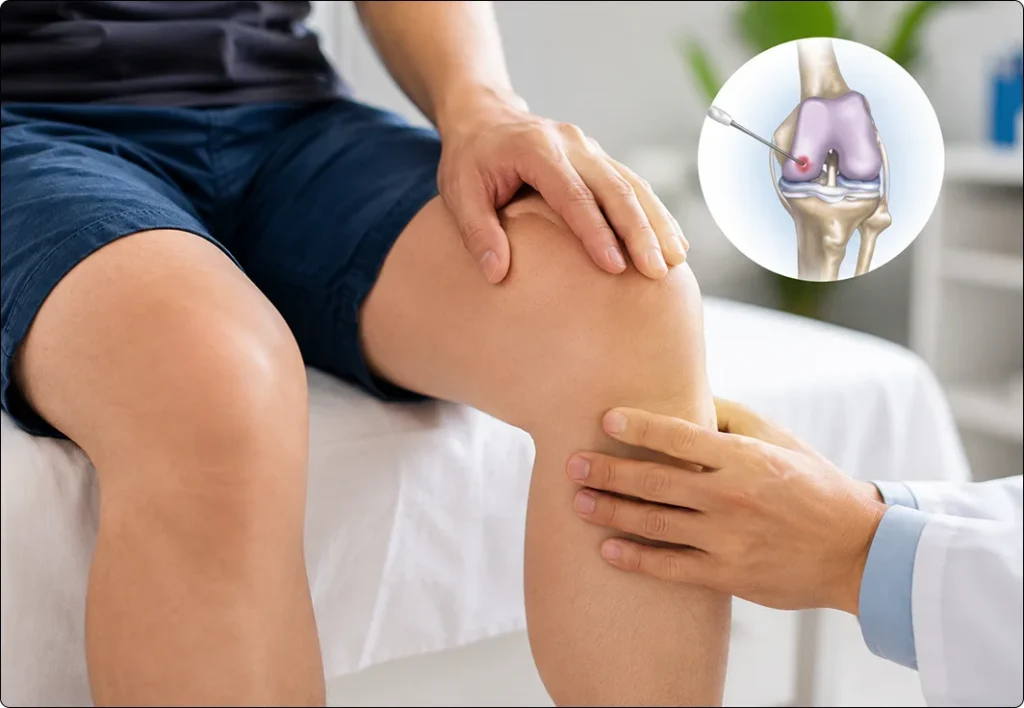
Joint preservation surgery repairs damaged parts of your joint while preserving the natural structure. Instead of removing your entire joint and replacing it with metal and plastic, the surgeon fixes what’s broken and preserves what still works.
Think of it like repairing a classic car. You wouldn’t scrap the entire vehicle just because the engine needs work. You’d fix the engine and keep the original frame, especially if the rest still runs well.
Your natural joint—even when damaged—usually functions better than an artificial one. The goal is to delay or altogether avoid joint replacement while keeping you active and pain-free.
God’s gifted joints are unique structures explicitly designed for your body. They have features that artificial joints can’t replicate:
Joint preservation works best for:
Those wanting to delay replacement, even if they’ll eventually need one. Buying 10-15 more years with your natural joint means better outcomes when replacement finally becomes necessary.
Age isn’t everything, though. A 70-year-old marathon runner might benefit more from preservation than a 50-year-old with a sedentary lifestyle.
Involves reviewing your symptoms, examining your joint, and reviewing imaging. This conversation explores whether preservation makes sense for your situation.
Physical therapy, medications, injections, and activity modifications often help significantly. Surgery happens only when conservative treatment doesn’t provide adequate relief.
Is usually performed through arthroscopy—small incisions with a camera and specialised instruments. Some preservation surgeries require open approaches, but minimally invasive techniques are suitable for most cases.
Varies by procedure. Simple arthroscopic repairs might have you moving within days. Osteotomies or complex reconstructions need several months. Physical therapy plays a crucial role in all preservation surgeries.
After treatment, a tailored rehabilitation and physical therapy program is key to regaining strength and mobility in the shoulder. The program includes:
The surgeon cuts away damaged bone and cartilage, then fits artificial components. It works wonderfully when joints are severely damaged, but it’s permanent and irreversible.
Only damaged tissue gets removed or repaired. Healthy bones, cartilage, and ligaments stay in place. If the procedure doesn’t give enough relief, replacement remains an option later.
Preservation surgeries often heal faster since less tissue gets disrupted. Many procedures happen through small arthroscopic incisions.
A well-done preservation procedure might last 10, 15, or even 20+ years. Some repairs last a lifetime, especially in younger patients with good healing capacity.
Not every damaged joint can be preserved. Severe arthritis affecting the entire joint often needs replacement. The honest answer is that sometimes replacement is the better choice.
The key is thorough evaluation. Advanced imaging (MRI, CT scans) shows exactly what’s damaged. Your age, activity level, and goals all factor into the decision. A 35-year-old engineer who plays recreational cricket has different needs than a 65-year-old with multiple health conditions.
Dr. Savadekar’s training in Israel and London focused heavily on joint preservation techniques. Working with international experts through the Arthroscopy Academy of Mumbai kept him up to date on the latest advances. This background means patients get an honest assessment: preserve when possible, replace when necessary.
Joint preservation works well when done for the right reasons in appropriate patients:
Meniscus repairs succeed in 70-85% of cases when the tear pattern is favourable
Rotator cuff repairs have 85-95% healing rates with modern techniques
Hip preservation can delay or prevent replacement in carefully selected patients
Cartilage procedures vary widely based on defect size and location
Honest expectations matter. Preservation might not make your joint perfect. The goal is significant improvement, less pain, better function, and return to activities you enjoy.
Some procedures buy time. Getting 10 good years from a preservation surgery means you’re 10 years older when replacement becomes necessary. Older patients often have easier recoveries from replacement and need fewer revision surgeries over their lifetime.
Joint preservation requires refined surgical judgment. The surgeon must:
Dr. Savadekar’s fellowship training specifically focused on advanced joint preservation techniques. His work at KEM Hospital, followed by specialised training in Tel Aviv and London, provided exposure to complex cases and cutting-edge methods.
Dr. Abhijeet attends seminars, conferences and workshops to learn the latest techniques in joint preservation.
Start by getting accurate information about your joint condition. Bring imaging studies to your consultation. Explain your activity goals honestly, whether that’s playing with grandchildren, returning to competitive sports, or simply walking without pain.
Ask questions:
The right surgeon recommends what’s best for you, not what they prefer doing.
With a wealth of experience in treating shoulder dislocations and a reputation as a leading shoulder specialist in Mumbai, Dr. Abhijeet Savadekar is an excellent choice for your shoulder care. His expertise spans over 12 years with more than 4000 successful knee and shoulder surgeries, including over 2500 arthroscopic surgeries. His patient-centered approach ensures you receive the best possible care tailored to your unique needs and lifestyle goals.
Don’t let a shoulder dislocation hold you back from living your life. Schedule an appointment with Dr. Savadekar today and take your first step towards recovery.